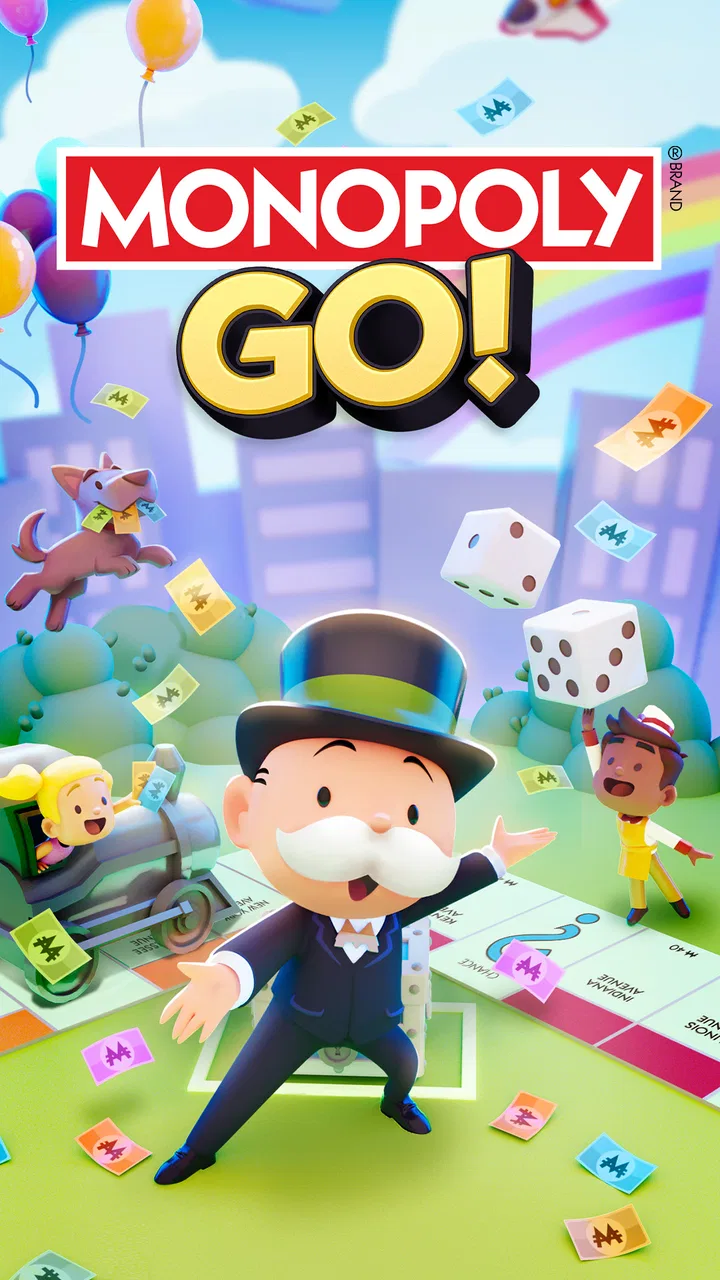
MONOPOLY GO!
- 4.6
- Rating
- 100.00M
- Installs
- Free
- Price

 Analysis by App-foxy
I went into MONOPOLY GO! expecting a familiar board game with a mobile makeover, but the experience is better understood as a quick, repeatable loop built around rolling, reacting, collecting, and trying again. Developed by Scopely, this free board game brings the recognizable property-trading idea into a much more active format. It also uses a Harry Potter-themed setting in part of its presentation, giving the usual roll-and-move structure a more playful identity.
The important question is not whether it reproduces a traditional family game perfectly. It does not. The better question is whether its short turns, frequent rewards, and constantly changing board give me a good reason to open it several times during the day. My answer is yes, with some clear reservations about spending pressure and the amount of control I have over outcomes.
One roll is enough to start the loop
The first action is wonderfully simple: I use available dice rolls and watch my token move around the board. There is no complicated opening tutorial to memorize before anything happens. The board tells me what matters, the dice determine the movement, and the result immediately points me toward the next small objective.
In-Depth Coverage of MONOPOLY GO!
That simplicity makes the game easy to pick up in a spare moment. I can start it while waiting for a bus, during a short break, or when I want something lighter than a full strategy game. A conventional digital board game may ask me to plan a complete match, manage several rules, and wait for another player. Here, the basic action is much more compact.
The trade-off is that I am not making the central movement decision. I can choose when to roll, but I cannot choose the number that appears. That distinction matters. Players looking for deep tactical control may find the first step too dependent on luck, while players who enjoy opening a reward and seeing what happens will probably find it immediately satisfying.
As I move, the board creates small moments of anticipation. Landing on a useful space can advance my progress, while a less helpful result still contributes to the next cycle. The game rarely makes a single roll feel completely meaningless, which is one reason the basic action remains attractive even when the outcome is not ideal.
What the first few minutes communicate
The game teaches its priorities through movement rather than long explanations. I learn to watch my rolls, notice the active goals, and pay attention to the resources that can improve my next stretch of play. This is a good design choice for a casual board game because I can understand the rhythm without studying a manual.
It also makes the experience approachable for families and younger players. The content rating is Everyone, and the presentation is colorful without requiring familiarity with complex strategy systems. Someone who knows the classic board game will recognize the broad inspiration, but a new player can still understand the mobile version on its own terms.
There is one subtle adjustment I had to make: I stopped treating every roll as a move toward a final victory. The more useful mindset is to see each roll as one input in a chain of small goals. Once I adopted that view, an ordinary landing felt less disappointing because it could still feed the next reward or help me reach a later target.
Where it differs from the tabletop original
The usual physical version of Monopoly is built around negotiation, direct choices, and a long contest over properties. This mobile adaptation is much more about individual progression and repeated actions. I am not sitting around a table making deals with friends in the same way. Instead, I am moving through a stream of compact objectives and collecting the results.
That makes it more convenient than a physical match when I only have a few minutes, but less satisfying if my favorite part of the original is bargaining. A dedicated digital board-game adaptation may be a better choice for someone who wants the full rules, deliberate property decisions, and a match that develops through strategic negotiation.
For me, the mobile format works best when I want the recognizable feel of a board, not a complete simulation of a long tabletop evening. That is an important expectation to set before installing it.
Feedback arrives quickly and keeps the board moving
After the action comes the feedback. A roll produces movement, movement produces a visible result, and that result usually connects to a reward, a task, or another reason to keep watching the board. This quick response is the strongest part of the design. I rarely have to wonder whether my last action mattered.
The feedback rhythm is made from several small signals rather than one dramatic conclusion. A landing can change my immediate progress, a completed objective can open another reward, and a good run of rolls can make the next few turns feel more valuable. The effect is similar to checking off a series of small errands: none is enormous by itself, but the sequence creates momentum.
The clever part is how the game turns waiting into anticipation. When my available rolls are limited, I do not simply stop caring about the board. I start thinking about what I want to do when I return, which goal is closest, and whether I should spend resources now or save them for a better opportunity. That pause gives the next session a clear purpose.
Reading the board instead of tapping automatically
A useful habit is to look at the board before rolling rather than tapping the button immediately every time it appears. I check which spaces could help with the current objective and whether the next reward is close enough to justify continuing. I still cannot control the dice, but I can make better decisions about timing and attention.
This is one of the less obvious strengths of the game. The luck remains central, yet the player is not completely passive. The meaningful choices are often about when to engage, which reward path to prioritize, and whether a limited resource is more useful now or later. Those choices will not satisfy a serious strategy enthusiast, but they add enough involvement to keep the loop from feeling like a screensaver.
You May Also Like

 Samsung Music
’s Quiet Strength Is Playing What You Already Own
Its reach comes less from spectacle than from dependable access to a personal library. That simplicity is both the app’s strongest retention engine and its ceiling.

 AccuWeather: Weather Radar
AccuWeather Review: A Quick, Clear Forecast for Everyday Decisions
For everyday plans, the best forecast is the one you can understand quickly. AccuWeather makes rain timing, radar, and local conditions easy to act on, with a few trade-offs.

 Hill Climb Racing
Why Hill Climb Racing Still Turns Crashes Into One More Run
A tiny car, a bumpy hill and one more upgrade: Hill Climb Racing keeps resurfacing because its simple chaos makes every near-miss feel personal.

 AliExpress - Shopping App
AliExpress Makes Global Shopping Feel Personal, but Shoppers Bear the Risk
AliExpress turns a global marketplace into a pocket-sized discovery engine. Its reach is useful, its shopping loop compelling, and its trade-offs easy to miss.

 Lords Mobile: Kingdom Wars
Lords Mobile Is a Kingdom-Building Routine, Not a Quick Match
A case-by-case verdict on the building, battles, device demands, and social commitments that make Lords Mobile rewarding for some players and exhausting for others.

 PDF Scanner app - TapScanner
TapScanner Makes Paperwork Easier to Capture, Check, and Share
TapScanner makes scanning with a phone feel less like a rescue operation and more like a dependable step in getting work done. Its capture tools are useful, though not flawless.
More From Our News Desk
View All News


I also found it helpful not to chase every visible goal at once. When several activities compete for attention, I focus on the one that is nearest to completion or gives the most useful next step. This reduces the feeling of scattered progress and makes each short session easier to understand.
Why the feedback can also become tiring
The same constant feedback that makes the game lively can make it feel busy. There is always another prompt, another progress bar, or another reward to inspect. Players who prefer quiet interfaces and uninterrupted play may find this presentation demanding, especially when they only wanted a quick board-game turn.
There is also a psychological cost to the frequent near-completions. Being one step away from a reward naturally makes me want to roll again, even when I had planned to stop. That is effective engagement design, but it means I need to set my own stopping point rather than trusting the game to provide one.
My practical rule is simple: I decide before playing whether I have time for one short session or a longer check-in. Without that boundary, the feedback rhythm can easily turn a small break into repeated tapping.
Rewards give each session a reason
The reward stage is where the loop becomes more than movement around a board. Progress feels tangible because the game continually gives me something to collect, improve, or work toward. The exact appeal varies from player to player, but the common thread is that a roll is rarely presented as an isolated event.
This structure is particularly effective for casual players who enjoy visible progress. I can return after a gap and quickly understand what I am building toward. That clarity is more inviting than a strategy game that expects me to remember a complicated position or reconstruct a long plan after several hours away.
The Harry Potter setting adds personality to this reward cycle. It gives the experience a more recognizable fantasy flavor than a plain modern board would have, while the MONOPOLY framework keeps the actions familiar. Fans of the wizarding world may enjoy the atmosphere, but the game still depends primarily on its roll-and-reward loop rather than on a deep story.
How I handle the temptation to spend
The game is free to download, but it includes in-app purchases ranging from $0.99 to $199.99 per item. That range is important for anyone deciding whether the free version is comfortable for them. I can play without treating payment as the main purpose, but the design clearly makes extra resources tempting when I want to continue, accelerate progress, or avoid feeling stuck.
My advice is to treat purchases as an optional convenience rather than part of the normal rules. I do not buy simply because a goal is close. Instead, I ask whether I would still enjoy the current session if the reward took longer. If the answer is no, the problem is probably not that I need the item; it is that the loop has pushed me past the point where the game feels relaxing.
This is also where the app differs from a normal board game. A physical set has a fixed purchase cost and then gives everyone the same basic materials. A free mobile game can keep offering reasons to return, but it can also make progress feel connected to spending. Players who want a completely predictable cost should choose a paid game with a clear one-time price instead.
A realistic everyday use case
Imagine I have ten minutes before an appointment. I open the game, use a few available rolls, collect progress from a nearby objective, and stop when the next step would require a longer commitment. That is a good use case because the loop gives me a beginning, a few satisfying responses, and a natural point to leave.
Another day, I might return during a commute and discover that the most interesting reward is almost within reach. I can use that information to decide whether to play now or wait. The game is strongest when I treat it as a series of small visits rather than a single marathon session.
It is less suitable when I want a focused activity with a definite ending. A classic board-game match has a clear arc, even if it takes a long time. Here, the next objective often appears before the previous excitement has fully faded, so the experience can feel open-ended.
Resetting makes the next visit feel unfinished
Every session eventually resets in a practical sense: the immediate rolls are used, the current burst of progress ends, and I leave the board with something still waiting for me. This reset is not a failure state. It is the mechanism that turns a completed visit into an invitation to return.
I like that the game does not require me to finish a full match before I can feel successful. A short visit can still produce a reward or move a goal forward. At the same time, the unfinished quality is deliberate. There is usually another milestone close enough to keep the game in my thoughts.
The best way to avoid frustration is to define success narrowly. I might decide that completing one objective is enough, or that I will play until my current rolls are gone. If I instead expect to clear everything visible, the game will always feel as though it is asking for one more session.
Returning without losing the thread
The app is friendly to interrupted play because the central loop is easy to remember. I do not need to reconstruct a complicated tactical position. I simply look at the current board, identify the nearest useful goal, and choose whether to roll now.
This makes it a better fit than many traditional board-game apps for people who play in fragments. A long digital strategy match can punish interruptions because the player forgets the plan or loses momentum. Here, the fragmented schedule is almost the point.
However, players who want a self-contained session should be cautious. The reset is designed to encourage another visit, not to provide a satisfying conclusion every time. I can enjoy that structure when I am in the mood for a background game, but I would not use it as my only board-game experience.
Device and audience considerations
The game supports devices running Android 6.0 or later, so it is accessible to many older Android users as well as newer phones. Its broad reach is reflected in its scale: it has passed 100 million installs and holds a 4.6 average from around 3 million ratings, with roughly 295 thousand written reviews. Those figures suggest a very large audience, although popularity does not remove the individual trade-offs around luck, repetition, and purchases.
The current version is 1.60.1, which matters when checking compatibility or troubleshooting a problem. I would keep the app updated through the normal store process, especially because live-service-style games can change their events and balance over time. The experience is also more comfortable for someone who accepts that the game may evolve rather than remain a fixed board.
For children, the Everyone rating makes the basic content approachable, but I would still treat purchase controls seriously on a shared device. The presence of optional items with a wide price range means that family use deserves the same spending awareness as any other free-to-play game.
The loop verdict: engaging in short bursts, weaker as a pure strategy game
My final view is that MONOPOLY GO! succeeds because its loop is easy to feel: I roll, the board answers immediately, a reward gives the action meaning, and the reset leaves a small unfinished reason to return. That sequence is polished enough to make a few minutes enjoyable, especially when I want something colorful and uncomplicated.
I recommend it to players who like casual board games, collectible progress, short sessions, and luck-driven surprises. It is also a good choice for someone who wants a familiar property-game identity without committing to a complete tabletop match. The Harry Potter flavor gives the presentation extra appeal if that setting is part of what draws you in.
I would skip it if you need strong control over every move, dislike recurring prompts, or want a board game with a clear finish and no pressure to consider optional spending. In those cases, a traditional digital Monopoly-style game or a dedicated turn-based strategy title will probably be more satisfying.
For everyone else, I suggest starting with a simple boundary: play a few rolls, inspect what the current objective is actually asking, and stop when the session stops feeling rewarding. That approach lets the free structure work in your favor. In my experience, the game is most enjoyable when I use it as a compact daily diversion rather than allowing its next reward to decide how long I stay.
Scopely has made a board game that is less about owning the perfect property set and more about maintaining a pleasant rhythm of action and response. It will not replace a thoughtful tabletop night, but it does not need to. As a mobile board game, its strongest achievement is making one more roll feel understandable, immediate, and just tempting enough to begin another short session.
FAQs for MONOPOLY GO!
01What is MONOPOLY GO! and how does it differ from the classic board game?
MONOPOLY GO! is a mobile adaptation of the classic MONOPOLY board game designed for Android and iOS devices. It incorporates traditional gameplay with modern twists, featuring interactive elements and vibrant graphics. While the core mechanics, like buying properties and collecting rent, remain, it introduces new challenges and community features that enhance social interaction and competitive play.
02Is MONOPOLY GO! free to play, or are there in-app purchases?
MONOPOLY GO! is free to download and play, offering a variety of features without cost. However, it includes in-app purchases that allow players to buy in-game currency and special items. These purchases can enhance the gaming experience but are not necessary to enjoy the game. It's important to note this for those who wish to manage spending.
03Does MONOPOLY GO! require an internet connection to play?
Yes, MONOPOLY GO! typically requires an internet connection, as it integrates social features and community events that necessitate online connectivity. This allows players to engage in multiplayer modes, participate in global leaderboards, and access regular updates. Offline play may be limited, so a stable connection is recommended for the full experience.
04What are the system requirements for installing MONOPOLY GO! on mobile devices?
To install MONOPOLY GO! on an Android device, it generally requires Android version 5.0 or later. For iOS devices, iOS 10.0 or later is required. The app may also need a certain amount of storage space and a stable internet connection. Checking the app store listing for specific device compatibility is advisable before downloading.
05How does multiplayer mode work in MONOPOLY GO!?
In MONOPOLY GO!, multiplayer mode allows players to compete against friends or other players worldwide. Users can invite friends to join private games or enter public matches through matchmaking. The game supports real-time interaction, where players can chat and strategize, making it a dynamic and engaging experience. Playing with others adds a layer of excitement and unpredictability.
Pros
- Engaging multiplayer mode for friends.
- Frequent updates keep gameplay fresh.
- Colorful graphics enhance user experience.
- Intuitive controls easy for beginners.
- Offers offline play for convenience.
Cons
- In-app purchases can be pricey.
- Occasional connectivity issues reported.
- Ads can be intrusive at times.
- Game can lag on older devices.
- Limited free content without purchases.

MONOPOLY GO!
Gallery